A single interaction history
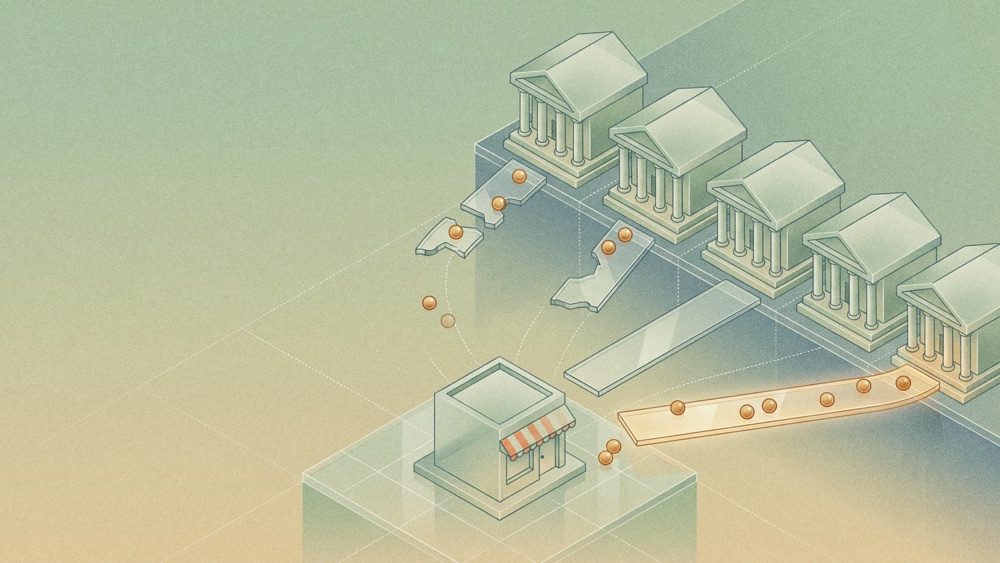
Sales, calls, requests and applications from digital channels are linked in the CRM. Staff see the customer’s history without switching between separate tools.
Customer profile, sales, requests and branch operations in one CRM. Deployed in the bank’s infrastructure.
CRM as the foundation of bank services
Kazakhstan. 23 banks no longer compete for the first account but for contact frequency and in-app services. Without a single customer profile and request history, there is nothing to build new products and ecosystems on. Uzbekistan. 34 banks have issued three cards per adult, but only half of the cards are active: many banks do not yet have a customer base to build services on. Without a single customer profile, there is nothing to build neobanks and new services on.
Operational CRM is the workspace for customer-facing staff: profile, request history and tasks in one window
Sales, calls, requests and applications from digital channels are linked in the CRM. Staff see the customer’s history without switching between separate tools.
Response times and request history help control service quality. The impact on retention is assessed using the bank’s data.
The CRM uses data from master systems. The scope of integrations and required changes are defined during the audit.
Products, applications, requests, calls and chats in one profile. Update frequency depends on integrations.
Leads from the website, campaigns, partners and events; assignment to managers, deadlines and conversion by stage.
Registration, routing and SLA-based escalation; task status sync with Jira.
A partner portal with QR codes and application statuses; a manager workspace to monitor activity and application quality.
Profile creation and service based on a digital ID; data exchange with the call center and digital channels.
Conversations, files and requests from messages; workload distribution and SLA control.
Audit of sales, service, master systems and channels; scope and implementation plan.
Deployment, first integrations, client profile, sales and requests.
Connecting partners, branches, communications and channels according to the agreed plan.
New channels and AI scenarios, delivered by the bank’s team or jointly with Rocket Tech.
Staff training runs in parallel with implementation and module rollout.
“A bank doesn’t need another system. It needs one screen where an employee sees the client and their history. That’s why implementation starts with the client profile and master systems, and modules are added along the way.”
 Oleg SolabayevCTO, Head of Product






In our case, 6 months, with the base version in 4. For another bank, the timeline depends on modules, integrations and the implementation plan.
License, hosting, subscription or turnkey implementation. The cost depends on modules and integrations.
The CRM is deployed in the bank’s infrastructure, and the profile is built from the bank’s systems. Access, external channels and data transfer are defined by the integration architecture.
In our case, the bank’s team can develop the system independently. For a new implementation, rights to the code, documentation and support are set out in the contract.
Options include request and sentiment analysis, prioritization and scoring scenarios. In our case, they are planned as the next stage; readiness and data access are assessed separately.
Your request goes to our business development team: we will get in touch, work out what needs to go live at your bank and propose a solution.
Thank you, your request has been sent
A business development manager will contact you using the details you provided.