"SaaS is dead"
The prerequisites for this have been accumulating for several years:
- In February 2024, Jensen Huang, head of Nvidia, said that the industry should make it so that no one has to program: now you can speak to a computer in ordinary human language.
- In December 2024, Satya Nadella, head of Microsoft, suggested that business applications in the era of AI agents will "collapse": essentially, they will become just a database, and the business logic will be taken over by agents.
- In February 2025, Andrej Karpathy coined the term "vibe coding". This is what he called the method of writing programs without looking at the code and trusting the model.
- In March 2025, Dario Amodei, head of Anthropic, promised that in six months AI would be writing 90% of code.
In February 2026, AI agents that work with documents and data themselves were added to this, and the market got seriously scared. Analysts at Forrester called what is happening the "SaaS-pocalypse".
What we agree with
The barrier to entry has indeed fallen. Development, design, copywriting, and intellectual labor in general have become more accessible. A service that used to take months of work and the budget of an expensive product team can now be put together by one person over a weekend.
It got to the point where Sam Altman, head of OpenAI, shared: his acquaintances are taking bets on what year the first one-person billion-dollar company will appear.
This is good news. The market will expand: many new products will appear, although most of them will be raw.
What we disagree with
There will be more products, but there won't be more high-quality ones. A raw service is very different from a product that sustains a business, and the boundary between them is clearly visible.
As long as the service remains an MVP (the first version to test an idea), one person can pull it off. As soon as the service starts bringing in money, new tasks appear:
- regulator requirements — for banks and large businesses, this is a separate, large layer of work;
- integrations and data — a product does not live on its own, but among other company systems;
- security — according to Veracode, in 45% of test tasks, code written by AI contained a vulnerability;
- support — users write, things break, and they need to be fixed today, not when there is time;
- development — a plan, priorities, and a product process are needed.
Building a service is now cheap, but owning it is still expensive. It needs to be integrated into the company's perimeter, and clients and users won't appear in it by themselves: marketing and sales are indispensable. At this stage, one person can no longer cope, and a team is needed.
Who watches the watchmen
AI writes code, draws interfaces, and prepares texts. But someone has to check that all this is correct, safe, and generally needed by people.
Developer surveys show that this is not a theoretical problem:
- Stack Overflow, 2025: 84% of developers already use AI, but 46% do not trust the accuracy of its answers, and only 33% trust it. The main complaint (66%): solutions that are "almost right, but not quite".
- METR, 2025: experienced developers in a controlled experiment solved tasks with AI 19% slower than without it, although they themselves were sure they were working faster.
The most dangerous thing is when a product works "almost right". Only someone who understands how it should be can notice a mistake. Therefore, expertise will not disappear, but will become a watchman.
The product team of the near future will be formed from experts who deeply know their respective fields and intersect at the right points:
- development — architecture and the right principles, without which the product will fall apart in its second year of life;
- user — how people work with the product, what they feel, and where they stumble;
- business — what the client pays for and how the product earns money.
Roles will change: less routine, more checking and decision-making. But AI will not replace the depth of understanding; it amplifies it.
"Product teams are moving to a new level of abstraction. Creating digital products, they get the opportunity to think more about architecture, business, value, quality of solutions, and marketing, rather than about individual variables, frameworks, lines of code, pixels in layouts, and tasks in the backlog. But when it comes to truly serious questions, who will you trust them to? Will you give product security to a vibe coder or an experienced security engineer? And the interface for people with disabilities to them too, and not to an experienced UX designer?"
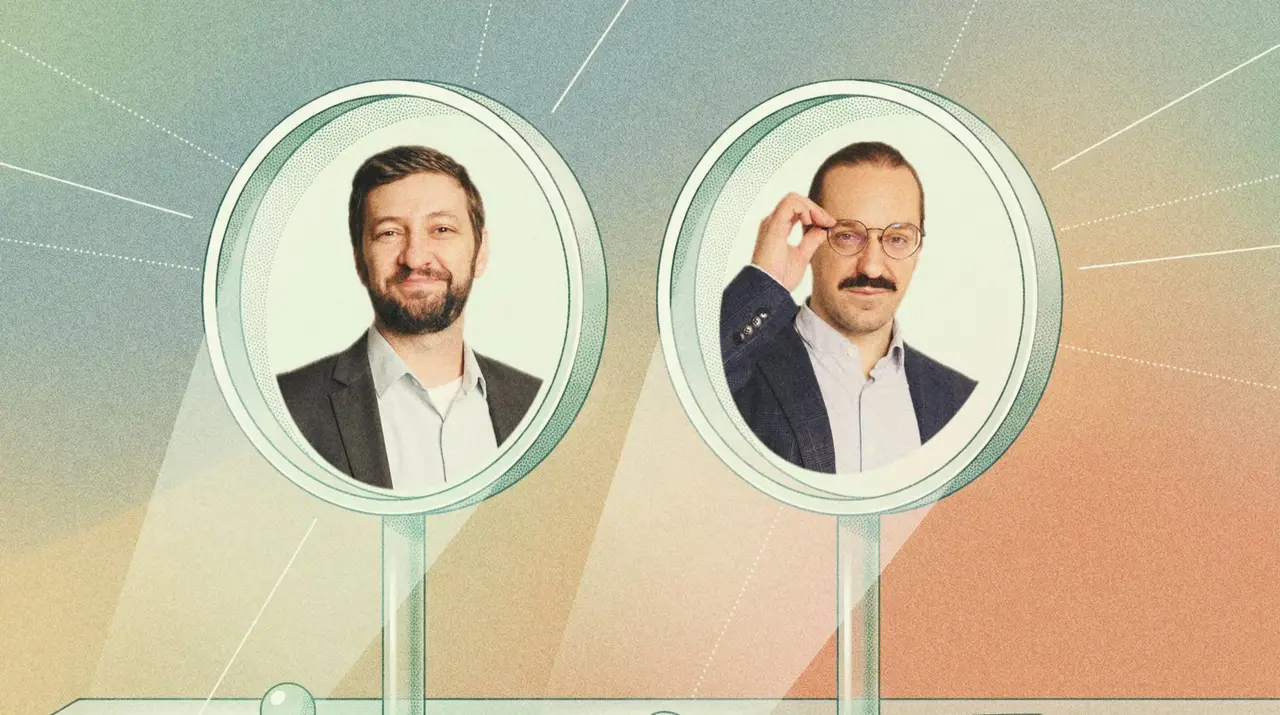
 Oleg Kachalinco-founder of Rocket Tech
Where the value of the product is now
Previously, development was expensive, complex, and consumed most of the resources. This in itself was a barrier: whoever had enough money and people for development had a product.
Now this barrier is lower, and what AI will not do for people comes to the forefront:
- finding an economically viable idea that clients are willing to pay for;
- forming a differentiator: how the product differs from competitors;
- correctly telling the market about the product;
- turning the product into a business.
AI here is a tool that cannot replace people. Jensen Huang thinks the same. In February 2026, at the height of the software stock sell-off, he called it "the most illogical thing in the world": AI agents will use existing software, not replace it. If you have a screwdriver, why invent a new one?
At Forrester, they came to the same conclusion from a different angle: the core of corporate systems is not going anywhere. Simple "single-function" services that are easy to replace are under threat. Products with unique data and processes deeply embedded in the company's operations will survive.
Why we look at chains, not functions
Here we see the main opportunity. The 2025 MIT NANDA report showed that 95% of companies do not get a measurable return from generative AI pilots. The reason is not in the models, but in the implementation: AI is poorly integrated into real processes.
We observe a similar problem with clients: almost everyone is currently at the experimentation stage. A chatbot here, a text generator there. Automating a single function changes almost nothing: the bottleneck simply moves to the next step.
Therefore, Rocket Tech is engaged in AI automation of entire process chains in the corporate sector: taking blocks of work from start to finish, rather than individual functions. We described how this looks for ourselves in the case study "How to automate 80% of routine".
"Expertise is not going anywhere, its role is simply changing. First, you need to deeply understand the client's business and figure out what is really worth automating. For this, we have assembled our own product, framework, and methodology: a small team of experts together with AI agents conducts development at all stages. But people are still responsible for the final product."
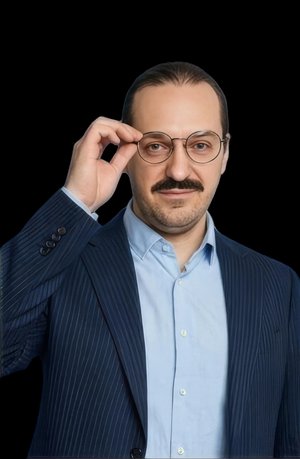
 Roman Nadeinco-founder and CEO of Rocket Tech
Conclusion
SaaS is not dead, expensive development is dead. Soon anyone will be able to launch their own service, and this is good for the market. But bringing a service to a product that sustains a business can still only be done by people who understand what they are building and why. Expertise does not disappear, its focus simply shifts from "writing code" to "deciding what code is needed and checking that it works". And this is only about creation. Selling a product and growing it into a business without an experienced team will also not work.