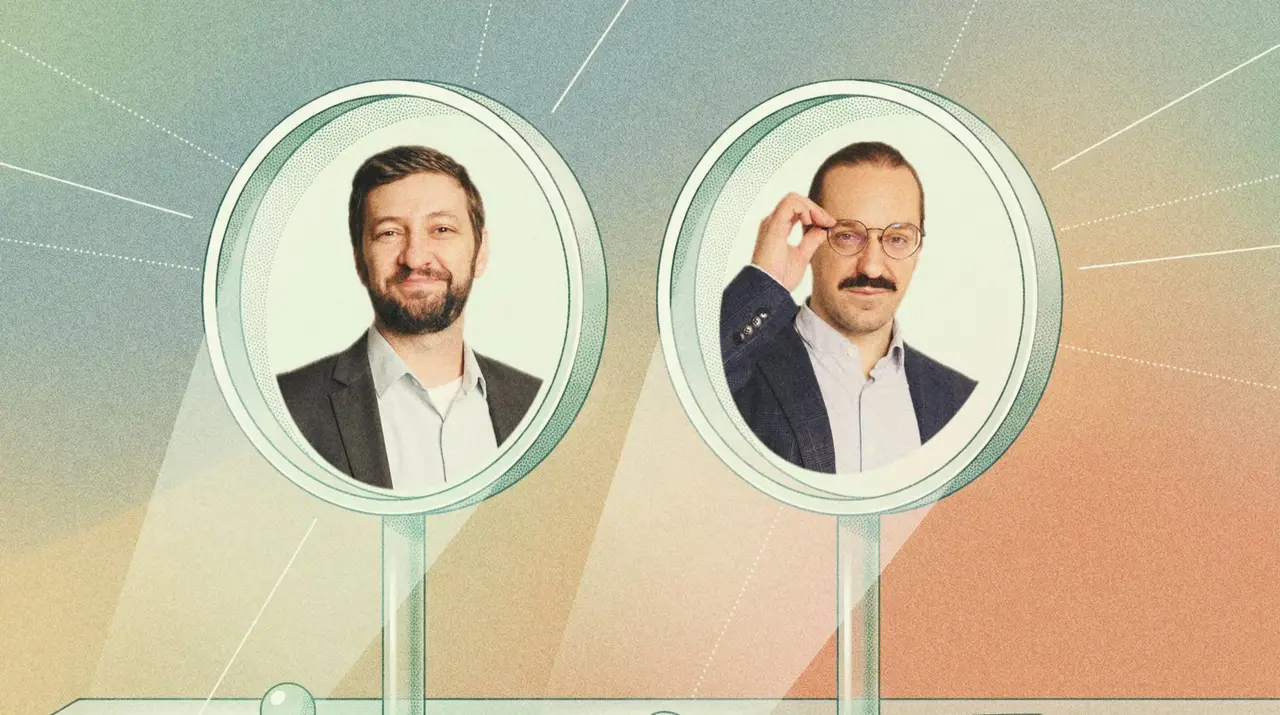
In 2025, Halyk Bank launched a series of technology meetups — Halyk Tech Sprints. These were not isolated events, but a structured sequence of attraction points for developers, analysts, architects, and engineers working with high-load and nationally critical services.
On Halyk's side, the meetups were conceived, guided, and promoted by:
- Indira Ashirova, HR Director at Halyk,
- Aldiar Arystanbayev, Managing Director for Innovation and Ecosystems at Halyk,
- Roman Tretyakov, Head of Ecosystem Products Department at Halyk.
All organizational aspects were handled by Rocket Events.
Each meetup was dedicated to a specific technological block — from development to high-load architectures and AI. The result was a series where each meeting logically complemented the previous one, forming a comprehensive picture of the modern banking technology environment.
Straight to the Numbers
Over the seven meetups held:
- Interest was gathered from 2,800 unique users,
- Nearly 1,000 visits were recorded,
- 60–65% of participants completed the program to the end,
- 100% of surveyed attendees were satisfied with the events and ready to recommend them to colleagues.

In addition, another indirect marker of market impact was recorded. In the "Top and Anti-top of Kazakhstani Companies" ranking by People Consulting, Halyk Bank won the "Takeoff of the Year" nomination, rising 13 positions across various categories based on the opinions of IT professionals.

Here we observe a correlation with the professional composition of socially active IT specialists in the market:
| Meetup Participants | Survey Respondents | |
|---|---|---|
| Number of participants | 965 | 1,111 |
| Backend development | 275 | ~156 |
| Data, ML, AI, and DB | 230 | ~133 |
| Product management | 110 | ~78 |
| DevOps and Sysadmins | 65 | ~44 |
| Frontend and Fullstack | 55 | ~33 |
Otherwise, the composition of specialists differs — in the research, a significant portion is made up of HR (~100), analysts (~122), and project managers (~89), whereas the meetup series was exclusively targeted at technical specialists.
Naturally, over the past year, Halyk implemented an entire ecosystem of activities, and this leap is the result of extensive, comprehensive work by the entire brand. Within this ecosystem, the meetup series became a point of deep contact with the target audience, helping to convert the bank's technological expertise into tangible attractiveness in the labor market.
Our AI Approach to Event Management Helped Improve Metrics
Sped up guest registration and notification by 5 times using a Telegram event bot
Guest registration, reminders, access control, and post-communication are routine event tasks that require multiple staff members, create queues at the venue, and increase the likelihood of errors.
For Halyk Tech Sprints, we used our proprietary full-cycle event bot, which covered the entire guest journey: from registration to receiving materials after the event. The bot automatically collected participant data, sent triggered reminders, provided quick QR check-ins at the venue, and distributed personalized certificates and materials post-event.

As a result, the speed of guest registration at the venue increased fivefold due to QR scanning instead of manual list searches. Post-communication became fully automated and no longer required manual effort from the team. This allowed the focus to shift to the substantive part of the events and the quality of interaction with the audience, rather than operational details.
Streamlined marketing content production with an AI agent in a Telegram bot
Simultaneously, we automated the regular release of accompanying content without increasing headcount. The solution was a proprietary AI agent with a pre-configured Tone of Voice. It takes raw data in any format as input and turns it into ready-made posts, news, and announcements that match the adopted communication style.

This standardized the delivery across all channels and exponentially accelerated content production without losing quality. Content ceased to depend on a specific author and became a reproducible process that scales with the business.
The event bot and content bot are independent products that we supply for automating events and processes. To discuss their implementation in your projects or to order the organization of industry events — contact us.
And now — a brief overview of each of the 7 meetups and their features, which shaped the expert field around the brand.
1. Halyk DEV Meetup — The Starting Point of the Technological Dialogue
August 1, 2025 — 75 participants
The first meetup opened the series with presentations on engineering processes and became a point where developers from different companies had the opportunity to see exactly how engineering culture is built in one of the country's largest fintechs. The program included topics on product architecture, the API-first approach, microservice logic, design system operations, and CI/CD.
Such events align the level of engineering standards in the industry and help young developers navigate modern approaches more quickly.

2. Highload Fintech — Everything Usually Hidden Behind the Facade of Banking Superapps
August 28, 2025 — 157 participants
This meetup was a logical continuation of the DEV meeting. The main focus was on handling loads during peak periods, the load testing process, scaling architectures, and approaches to fault tolerance.
Highload topics are rarely brought into the public sphere, making this meetup crucial for those working with large-scale systems. Engineers had the opportunity to analyze real load scenarios, failures, scaling architectures, and stress-testing approaches.

3. Digital Payments Meetup — The Internal Mechanics of Payments
September 18, 2025 — 200 participants
The third meeting shifted from development to business infrastructure. Most specialists only see one part of financial operations — their modules or pieces of processes. This meetup gave the professional community a holistic understanding of the transaction lifecycle, the interaction of payment mechanisms, and the bank's role in the ecosystem.
Such knowledge allows engineers, analysts, and product teams to speak the same language and better understand the consequences of the changes they implement.

4. DBA Meetup — A Rare Platform for Data Specialists
October 23, 2025 — 166 participants
A separate meeting was dedicated to databases — one of the most closed and complex topics for technical events.
The meetup provided a space to discuss real problems: replication, migrations, distributed storage systems, query optimization, and DBMS comparisons. For the local market, this creates support and experience sharing in a niche where each engineer usually stews in isolation.

5. Big Data Meetup — Data as a Strategic Asset
November 7, 2025 — 222 participants
By the middle of the series, the focus shifted to a large scale — data storage, processing, and utilization. Discussions covered lakehouse architectures, self-service analytics, real-time streaming systems, personalization of banking services, and marketing automation.
This meeting demonstrated that the series was evolving: from engineering to analytics, from tooling to data strategy. The meetup became a platform where analysts, data engineers, marketers, and product managers saw that they were part of one large process.

6. BaaS Ecosystems Meetup — A Look into the Future of Banking Platforms
November 20, 2025 — 120 participants
When the audience is already immersed in architecture, data, and processes, it is logical to move from talking about specific services to discussing platforms: APIs, SDKs, white-label solutions, partner scenarios, and unified identification.
This broadens the specialists' horizons — from internal product structures to ecosystem thinking. It is precisely such discussions that shape the future architects of the market.

7. AI Meetup — Uniting Technologies into a Single Semantic Point
December 11, 2025 — 245 participants
The final meetup was dedicated to AI — a technology that builds upon all previous topics: data, products, infrastructure, and development. The meetup showed how ML and generative models are integrated into processing, scoring, antifraud, communications, UX, and automation.
For the community, this was an opportunity to see how AI is becoming the norm rather than an experiment, and what competencies specialists will need in the near future.

Additional Engagement Mechanic: The "Participant Passport" as a Way to Unite the Series into a Single Route
To ensure the Halyk Tech Sprints series functioned not as a set of disjointed events, but as a cohesive educational route, a separate mechanic was launched — the "Participant Passport." This is a simple but highly effective engagement tool that helps form a strong bond between the specialist and the community.
Each meetup guest received a physical passport containing seven spots for stamps — corresponding to the number of events in the series. A stamp was given only for in-person attendance at the respective meetup, turning participation into a kind of development track: from development and payments to big data and AI. For many specialists, the passport became a personal chronology of expertise building.

The finale of the mechanic was a prize draw at the AI Meetup — to reward regular participation rather than random visits:
- MacBook Air — among participants who collected 7 or more stamps
- 3 pairs of AirPods — for those who collected 5–6 stamps
- 4 Alice smart speakers — for participants with 3–4 stamps

The mechanic proved to be more than just a gamification tool — it tied the series into a single story and created an additional social effect: participants eagerly exchanged impressions, discussed which meetups they attended, and strove to return to complete their "route." Such elements form a lively, emotionally engaged professional community around the events.
Key Insights from the Meetup Series
To understand how the audience reacted to the Halyk Tech Sprints series, we analyzed the metrics of all meetups: from initial interest to check-ins, certificate issuance, and survey completion. Breaking the data down into semantic blocks yields several important conclusions.
Key Insights from the Meetup Series
On average, each meetup:
- Gathered 350–400 people who showed interest,
- Had an average conversion rate to full registration of about 80%.
This indicates that the meetup topics hit the mark with the professional community's demands.
Attendance Grew from Meetup to Meetup
Logically, people came more often to popular topics and less often to highly specialized ones, but the overall dynamic grew as the series progressed:
- 1st meetup: 75 attendees,
- 2nd–3rd meetups: already 150–200 attendees,
- 4th–7th meetups: retention at the level of 160 to 240 participants.
Thus, attendance grew almost threefold by the third meetup. In some cases, the number of check-ins exceeded the number of participation confirmations — the audience came even without an RSVP, highlighting the trend of growing trust in the series.
Engagement: Most of the Audience Stays Until the End
Following the seven meetups:
- Over 500 participants received certificates,
- On average, 60–65% of attendees completed the program to the end — a very high metric for technical meetups,
- Up to 25% of participants provided feedback in surveys, but all respondents recommended the meetup to others, meaning the NPS was effectively close to 100%.
Series Summary
Following the seven meetups:
- Nearly 1,000 visits were collected,
- Over 500 certificates were issued,
- Format awareness increased,
- The audience shifted from casual attendees to regulars.
The meetup series transformed from isolated events into a center of gravity for the technological community. The data confirms that the format works, evolves, and becomes part of the professional culture.
The Bottom Line: Why Big Tech Needs Offline Communities and the Role Professional Meetups Play
The Halyk Tech Sprints series demonstrates how powerful a tool offline communication can be in the technology sector.
When engineers, analysts, product managers, and architects meet in a hall rather than in chats, connections are formed that are impossible to create in an asynchronous environment. Cases are discussed that will never make it into public articles. A sense of a shared professional environment emerges, where everyone can learn from others, share experiences, and understand that their work is part of a larger system.
For big tech, this is not about "an event for the sake of an event." It is about:
- Strengthening the internal brand and engineering culture. When a company opens up its processes and discusses real technical solutions, it builds respect among professionals — both its own employees and external ones.
- Forming a pool of loyal specialists. A community is a long-term HR tool: people who feel a sense of belonging to a company's professional environment are much more willing to come work there.
- Increasing awareness of technological expertise. Through such events, a company broadcasts that it is betting on technology, complex solutions, and industry development.
- Creating a platform for dialogue with the market. Meetups allow for gathering feedback, exchanging best practices, discussing standards, and steering industry development in the right direction.
- Developing ecosystem thinking. For large platforms, it is important not just to create products, but to build a professional field around them. The community becomes a natural extension of the ecosystem.
Therefore, if a company wants to be more than just a service, but a technological growth hub, it is essential to develop offline events not as one-off promotions, but as a strategic tool for building a community and promoting the HR brand.
At Rocket Events, we know how to create such professional points of attraction — from topic methodology to the full cycle of event execution. These same approaches can be applied to other large companies that need to develop their own community and strengthen their play in the technology field. If you need to organize a professional event — contact us to discuss your project.